The Owl Service (1967) by Alan Garner OBE FRSL is an award-winning fantasy novel for young adults that affected me very strongly the first time I read it.
The Owl Service is a story of the supernatural. It involves something that has been called in other articles a scripted scenario.
The story is set in modern Wales. The plotline is based on a story from Welsh mythology, a story about betrayal and destruction involving a triangle of two men and a woman.
Three teenagers, Alison the English girl, Roger the English boy and Gwyn the Welsh boy, re-enact the story - or rather the story re-enacts itself through them as it has been doing down the years and through the generations.
The girl is once again the betrayer, and the two boys hit each other where it hurts most.
Some of the witty remarks that various characters make have a positive effect when read; there are also some very cruel and hurtful comments that are painful to read and have a very negative effect. This article highlights some of the best and worst of these comments.
Parents and step-parents
Alison’s mother is a terrible emotional blackmailer and Gwyn’s bitter mother seems sadistically determined to sabotage his life, not just for personal reasons but because of unfinished business from the past.
Tuesday, 11 February 2020
Monday, 3 February 2020
Passing it on: Diana Wynne Jones and the fantasy ban
An article or two about the very big, complex and excruciatingly painful subject of why people who have suffered at the hands of their parents often go on to make their own children suffer in exactly the same way has been on my mental to-do list for many years now.
There is also something to say about people who make a conscious decision not to pass on to their children the ill-treatment they experienced. They may have been receivers but they did not become transmitters.
The time has come to look at a few examples and try to think of a few explanations. The examples mainly involve writers who have been featured or mentioned on here.
It was something I read recently in Diana Wynne Jones’s account of her early life that made me decide to finally get some ideas down on paper at long last Her story provides a very good example to start with: it tells of someone who passed it on to someone who didn’t.
Diana Wynne Jones and two generations of censorship
In her book Reflections: On the Magic of Writing, Diana Wynne Jones tells us how she was starved for reading material throughout her childhood.
Her mother, who was an appalling person, added insult to injury by censoring the Piper at the Gates of Dawn chapter in The Wind in the Willows because it was ‘too fanciful’.
There is also something to say about people who make a conscious decision not to pass on to their children the ill-treatment they experienced. They may have been receivers but they did not become transmitters.
The time has come to look at a few examples and try to think of a few explanations. The examples mainly involve writers who have been featured or mentioned on here.
It was something I read recently in Diana Wynne Jones’s account of her early life that made me decide to finally get some ideas down on paper at long last Her story provides a very good example to start with: it tells of someone who passed it on to someone who didn’t.
Diana Wynne Jones and two generations of censorship
In her book Reflections: On the Magic of Writing, Diana Wynne Jones tells us how she was starved for reading material throughout her childhood.
Her mother, who was an appalling person, added insult to injury by censoring the Piper at the Gates of Dawn chapter in The Wind in the Willows because it was ‘too fanciful’.


Monday, 27 January 2020
Public libraries present
For much of my life, I took the existence of public libraries for granted: they were just there. I can now look at them more objectively and put my experiences into various contexts.
I now know something about the background and history of public libraries and about other people’s views on and experiences of them.
There was a long discussion about free public libraries on the old Conservative Conspiracy Forum. Some posters approved of them, others did not. I made several contributions in their favour and challenged some of the points made by the antis.
In addition to my personal memories, those old posts and some information I compiled at the time are the main source of material for the public library articles.
This one will bring my personal experience up to date.
Leaving the public library behind
After leaving school, I continued to be a great user of local public libraries for some years. Then came a time when I allowed my membership to lapse and even forgot that public libraries existed! Buying books instead of borrowing them became the norm for me.
I now know something about the background and history of public libraries and about other people’s views on and experiences of them.
There was a long discussion about free public libraries on the old Conservative Conspiracy Forum. Some posters approved of them, others did not. I made several contributions in their favour and challenged some of the points made by the antis.
In addition to my personal memories, those old posts and some information I compiled at the time are the main source of material for the public library articles.
This one will bring my personal experience up to date.
Leaving the public library behind
After leaving school, I continued to be a great user of local public libraries for some years. Then came a time when I allowed my membership to lapse and even forgot that public libraries existed! Buying books instead of borrowing them became the norm for me.
There were several reasons for my defection:
I had moved to an area where the local library was not at all impressive; it was small and there was a very poor showing on the shelves, with little to make browsing worthwhile.
I became interested in New Age and other types of metaphysical books that my library didn’t stock.
I could afford to buy whatever books I wanted, fiction and non-fiction, new or second-hand as available, and I was spoilt for choice as there were many bookshops of various kinds within easy reach including specialist, second-hand and discount. There were charity shops everywhere and they were a good source of cheap books. Some street market stalls sold books too. Browsing in all these places was enjoyable and very productive.
I had moved to an area where the local library was not at all impressive; it was small and there was a very poor showing on the shelves, with little to make browsing worthwhile.
I became interested in New Age and other types of metaphysical books that my library didn’t stock.
I could afford to buy whatever books I wanted, fiction and non-fiction, new or second-hand as available, and I was spoilt for choice as there were many bookshops of various kinds within easy reach including specialist, second-hand and discount. There were charity shops everywhere and they were a good source of cheap books. Some street market stalls sold books too. Browsing in all these places was enjoyable and very productive.
Monday, 20 January 2020
L. M. Montgomery and Rudyard Kipling’s Cat
The Cat That Walked by Himself is one of the stories in Rudyard Kipling’s children’s classic Just So Stories (1902).
This book contains tales about various wild animals:
“...the wildest of all the wild animals was the Cat. He walked by himself, and all places were alike to him.”
The Cat walks through the Wet Wild Woods, waving his wild tail and walking by his wild lone.
L. M. Montgomery knew this story, and it meant a lot to her. Her heroine Emily Starr mentions it after her friend Dean warns her about the pressure to conform at school:
“"...Don't let them make anything of you but yourself, that's all. I don't think they will.’
"No, they won't," said Emily decidedly. "I'm like Kipling's cat--I walk by my wild lone and wave my wild tail where so it pleases me. That's why the Murrays look askance at me. They think I should only run with the pack."”
From Emily Climbs (1925)
Later in the book, Emily gets the chance to go to live in New York. She is very torn, thinking about what she might gain and what she might lose:
“Would the Wind Woman come to her in the crowded city streets? Could she be like Kipling's cat there?”
She decides to remain with her people and the old farm on her beloved Prince Edward Island, even though it means missing many opportunities to broaden her horizons and have a career.
Lucy Maud Montgomery made some very different decisions, and she came to regret them as terrible mistakes.
This book contains tales about various wild animals:
“...the wildest of all the wild animals was the Cat. He walked by himself, and all places were alike to him.”
The Cat walks through the Wet Wild Woods, waving his wild tail and walking by his wild lone.
L. M. Montgomery knew this story, and it meant a lot to her. Her heroine Emily Starr mentions it after her friend Dean warns her about the pressure to conform at school:
“"...Don't let them make anything of you but yourself, that's all. I don't think they will.’
"No, they won't," said Emily decidedly. "I'm like Kipling's cat--I walk by my wild lone and wave my wild tail where so it pleases me. That's why the Murrays look askance at me. They think I should only run with the pack."”
From Emily Climbs (1925)
Later in the book, Emily gets the chance to go to live in New York. She is very torn, thinking about what she might gain and what she might lose:
“Would the Wind Woman come to her in the crowded city streets? Could she be like Kipling's cat there?”
She decides to remain with her people and the old farm on her beloved Prince Edward Island, even though it means missing many opportunities to broaden her horizons and have a career.
Lucy Maud Montgomery made some very different decisions, and she came to regret them as terrible mistakes.
Monday, 13 January 2020
Stella Gibbons and some libraries
Terry Pratchett is not the only writer of interest who both feasted on library books and created books for other library users to read.
Stella Gibbons, whose life and books have been featured on here, is another writer who both took out and put in. My first encounter with her work was via books that came from the public library.
Internal evidence from her books suggests to me that Stella Gibbons considered libraries to be an important part of life and that she was very familiar with the various types, not to mention the differing social classes and educational and intellectual levels of the members.
She found much good reading material on the family bookshelves when young, but probably joined a public library too.
As an adult she was a user of her local public library for many years. She may also have subscribed to a circulating library as they were still going strong in the first half of the 20th century despite the competition from the free public libraries and she features two of them in one of her books.
Stella Gibbons, whose life and books have been featured on here, is another writer who both took out and put in. My first encounter with her work was via books that came from the public library.
Internal evidence from her books suggests to me that Stella Gibbons considered libraries to be an important part of life and that she was very familiar with the various types, not to mention the differing social classes and educational and intellectual levels of the members.
She found much good reading material on the family bookshelves when young, but probably joined a public library too.
As an adult she was a user of her local public library for many years. She may also have subscribed to a circulating library as they were still going strong in the first half of the 20th century despite the competition from the free public libraries and she features two of them in one of her books.
Sunday, 5 January 2020
January 6th and a few associated birthdays
Some aspects of the lives of Stella Gibbons and Stella Benson were compared in the post that marked their birthdays.
There are a few more associated birthdays to mention.
Stella Benson shares the day of her birth, January 6th, with SF writer Eric Frank Russell and engineer/ businessman John DeLorean.
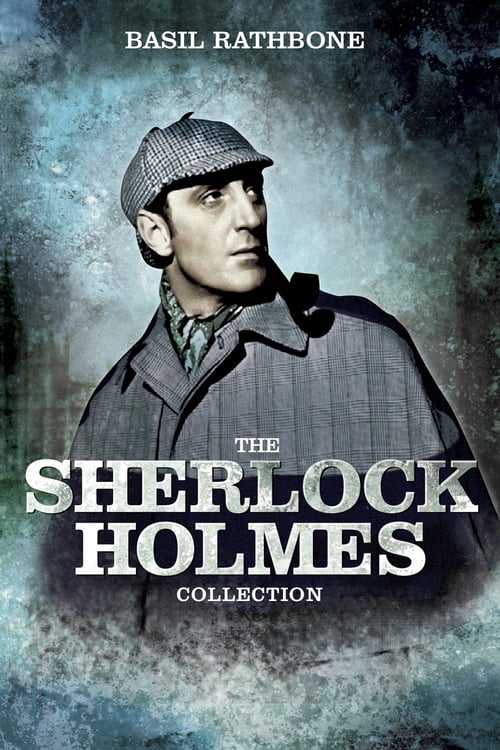
January 6th is also said to be Sherlock Holmes’s birthday.
Stella Benson shares the year of her birth, 1892, with J. R. R. Tolkien, who was born a few days earlier.
Incidentally, Lucy M. Boston was also born in 1892, as was Basil Rathbone, the actor who played Holmes in major Hollywood films.
By coincidence, both Tolkien and Rathbone were born in South Africa.
Sherlock Holmes is deduced to have been born on January 6th 1854:


There are a few more associated birthdays to mention.
Stella Benson shares the day of her birth, January 6th, with SF writer Eric Frank Russell and engineer/ businessman John DeLorean.
January 6th is also said to be Sherlock Holmes’s birthday.
Stella Benson shares the year of her birth, 1892, with J. R. R. Tolkien, who was born a few days earlier.
Incidentally, Lucy M. Boston was also born in 1892, as was Basil Rathbone, the actor who played Holmes in major Hollywood films.
By coincidence, both Tolkien and Rathbone were born in South Africa.
Sherlock Holmes is deduced to have been born on January 6th 1854:

Tuesday, 31 December 2019
Ringing out the old year and ringing in the new
Alfred, Lord Tennyson’s very popular poem Ring Out, Wild Bells describes a ritual in which the bells in English parish churches are rung at midnight on New Year’s Eve to mark the departure of the old year and the arrival of the new one.
It is a way of saying both ‘good riddance’ and ‘welcome’!
The words speak for themselves; I find them inspiring but also depressing: new beginnings seem possible, but the golden age he wished for is still not here after 170 years.
Ring Out, Wild Bells was first published in 1850, the year Tennyson was appointed Poet Laureate. It forms part of his elegy In Memoriam.
Ring out, wild bells, to the wild sky,
The flying cloud, the frosty light:
The year is dying in the night;
Ring out, wild bells, and let him die.
Ring out the old, ring in the new,
Ring, happy bells, across the snow:
The year is going, let him go;
Ring out the false, ring in the true.
Ring out the grief that saps the mind
For those that here we see no more;
Ring out the feud of rich and poor,
Ring in redress to all mankind.
Ring out a slowly dying cause,
And ancient forms of party strife;
Ring in the nobler modes of life,
With sweeter manners, purer laws.
Ring out the want, the care, the sin,
The faithless coldness of the times;
Ring out, ring out my mournful rhymes
But ring the fuller minstrel in.
Ring out false pride in place and blood,
The civic slander and the spite;
Ring in the love of truth and right,
Ring in the common love of good.
Ring out old shapes of foul disease;
Ring out the narrowing lust of gold;
Ring out the thousand wars of old,
Ring in the thousand years of peace.
Ring in the valiant man and free,
The larger heart, the kindlier hand;
Ring out the darkness of the land,
Ring in the Christ that is to be.
This poem is in the public domain and can be found online in many places, including Project Gutenberg.
The poetry and the poet:


It is a way of saying both ‘good riddance’ and ‘welcome’!
The words speak for themselves; I find them inspiring but also depressing: new beginnings seem possible, but the golden age he wished for is still not here after 170 years.
Ring Out, Wild Bells was first published in 1850, the year Tennyson was appointed Poet Laureate. It forms part of his elegy In Memoriam.
Ring out, wild bells, to the wild sky,
The flying cloud, the frosty light:
The year is dying in the night;
Ring out, wild bells, and let him die.
Ring out the old, ring in the new,
Ring, happy bells, across the snow:
The year is going, let him go;
Ring out the false, ring in the true.
Ring out the grief that saps the mind
For those that here we see no more;
Ring out the feud of rich and poor,
Ring in redress to all mankind.
Ring out a slowly dying cause,
And ancient forms of party strife;
Ring in the nobler modes of life,
With sweeter manners, purer laws.
Ring out the want, the care, the sin,
The faithless coldness of the times;
Ring out, ring out my mournful rhymes
But ring the fuller minstrel in.
Ring out false pride in place and blood,
The civic slander and the spite;
Ring in the love of truth and right,
Ring in the common love of good.
Ring out old shapes of foul disease;
Ring out the narrowing lust of gold;
Ring out the thousand wars of old,
Ring in the thousand years of peace.
Ring in the valiant man and free,
The larger heart, the kindlier hand;
Ring out the darkness of the land,
Ring in the Christ that is to be.
This poem is in the public domain and can be found online in many places, including Project Gutenberg.
The poetry and the poet:


Subscribe to:
Posts (Atom)


